Approval Latency: The Governance Gap Between an AI's Decision and a Human's Conscience

Photo: empty executive boardroom at night with glowing screens, via thumbs.dreamstime.com
Somewhere in a corporate data center tonight, an algorithm will authorize a payment, adjust a price, or decline a counterparty — all before any member of the executive team has finished reading their morning briefing. The system acted within its mandate. The mandate was approved in a meeting. And if the decision turns out to be catastrophic, the distance between those two facts is where American enterprises are currently losing their way.
The problem is not that artificial intelligence makes mistakes. Every transformative technology has. The problem is that AI's mistakes travel at machine speed while human accountability travels at the speed of committee governance. Call it approval latency: the gap between when an autonomous system acts and when a responsible human can meaningfully intervene. For most organizations, that gap has never been measured, let alone governed.
The Vacancy at the Top of the Escalation Chain
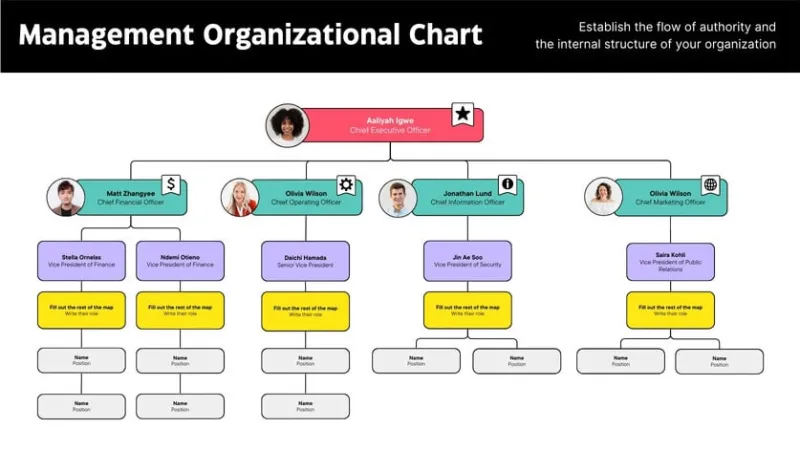
Traditional corporate accountability follows a familiar chain: an employee acts, a manager reviews, an executive approves, a board oversees. When software makes the decision, the chain doesn't break — it just goes silent. Nobody has been fired for what a model did at 2 a.m., because nobody was awake, and more to the point, nobody was assigned.
Legal scholars have a term for the resulting condition: the accountability vacuum. A trading algorithm errs and the firm points to the vendor. The vendor points to the configuration the client chose. The client points to the committee that approved the deployment. Everyone in the chain performed their designated role, and yet the harm has no owner. In the American legal system, harms without owners tend to become harms without remedies — until a plaintiff's attorney, a state attorney general, or the FTC decides to supply one.
Regulators are beginning to close the gap in specific domains. The SEC has signaled interest in algorithmic accountability in financial markets. The Colorado AI Act and the EU AI Act, which will touch any US company with European exposure, both impose documentation and human-oversight obligations. But sector-by-sector regulation will always lag deployment. Enterprises waiting for a compliance checklist are waiting for permission to avoid a question they should be answering themselves.
Underwriting the Algorithm
One of the more revealing developments of the past two years has come not from legislatures but from insurers. Specialty carriers are now writing policies that cover algorithmic errors — erroneous automated decisions, model drift, even certain categories of autonomous action. These products are nascent, and underwriters are understandably conservative, but their existence changes the conversation in a productive way.
Insurance is, at its core, the pricing of accountability. When a carrier agrees to cover an AI system's mistakes, it must first decide whose mistakes they are, what controls mitigate them, and what evidence of governance the insured must produce. In other words, the underwriting questionnaire is quietly becoming the governance framework that boards have failed to write for themselves. Expect this to accelerate: just as cyber liability coverage moved from novelty to board-mandated necessity within a decade, algorithmic error coverage is likely to follow the same trajectory — and the audit requirements attached to it will define what 'responsible deployment' means in practice.
What Boards Should Demand Before Granting Transactional Authority
The question facing directors is not philosophical. It is procedural: under what conditions does this organization permit a system to commit capital, extend credit, or bind the company contractually without a human in the loop? A few demands are reasonable in every case.
First, a named accountable executive. Not a committee, not a 'center of excellence' — an individual whose title includes ownership of autonomous system outcomes. Accountability that is diffused is accountability that is denied.
Second, a reversal protocol. If the system acts and the action is wrong, how quickly can it be unwound, and who holds the kill switch at night? If the answer requires waking up a vendor's support desk, the organization has outsourced its own reflexes.
Third, a decision-value threshold. Not every automated action warrants human review, but every category of action warrants a documented ceiling — a maximum dollar exposure, a maximum irreversibility — beyond which the machine must wait for a person. The ceiling should be set by the board's risk committee, not by the vendor's default configuration.
Fourth, evidence. Model versioning, decision logs, and override records retained in a form that will survive discovery. The organization that cannot reconstruct what its AI did will not be able to defend what its AI did.
Speed Is Not an Excuse
The standard rebuttal is that human oversight would erase the efficiency that justified the technology. This conflates oversight with interruption. Well-designed systems sample, audit, and escalate — they do not require a human to approve every transaction any more than a bank requires a teller to approve every cleared check. The goal is not to slow the machine down. It is to ensure that when the machine is wrong, the organization finds out fast, reverses cleanly, and can name the person who owns the aftermath.
Autonomy in enterprise software is not a license; it is a delegation. And delegation without accountability is not innovation — it is abdication with better branding. The companies that will lead the next decade of enterprise AI are not the ones with the most capable models. They are the ones that can answer, in one sentence, who signs off when the machine gets it wrong. If that sentence doesn't exist yet, the organization hasn't deployed AI. It has deployed risk.