Reporting Into a Algorithm: Why Org Design, Not Model Quality, Is Holding American AI Back
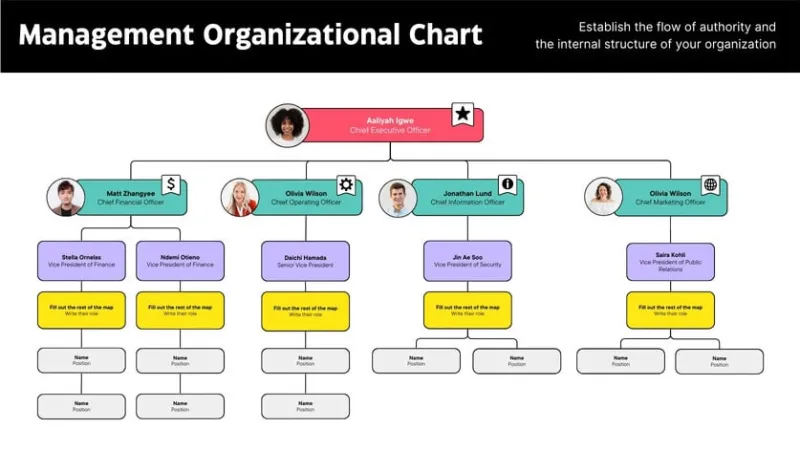
Photo: modern corporate office org chart whiteboard meeting professionals, via marketplace.canva.com
There is a particular kind of executive meeting that plays out in conference rooms from Chicago to Charlotte with remarkable consistency. A leadership team reviews the progress of its artificial intelligence initiative. The technology works — the vendor proved it, the pilot proved it, the benchmarks prove it. And yet eighteen months in, the enterprise has little to show beyond a handful of chatbot deployments and a slide deck of aspirational use cases.
The instinct is to blame the software. The more honest diagnosis is architectural, and it has nothing to do with servers. It has to do with boxes on an organizational chart.
The Bottleneck Was Never the Model
Enterprises have spent the last three years operating under a quiet assumption: that AI is a technology purchase, and technology purchases slot into existing structures. The CIO buys it, IT implements it, business units use it. This is how ERP went in. This is how the cloud went in. It is not how AI goes in.
The difference is accountability. Traditional software executes instructions; it does not make judgment calls. AI systems — the ones generating content, triaging customers, flagging fraud, drafting contracts — produce outputs that carry consequences. Consequences require owners. And most American org charts have no owner for a decision made partially by a machine.
So the work drifts. Data science reports to engineering, but the outcomes matter to operations. The business units feel the pain, but they lack the mandate to change the tool. Everyone owns a piece; nobody owns the result. In this vacuum, even excellent technology stalls.
Who Should Own an Outcome That a Machine Produces Half Of?
The first question every leadership team should answer is deceptively simple: when this system gets something wrong, whose name is on it?
Three models are emerging across US enterprises, and each fits a different stage of maturity.
The embedded model assigns AI outcomes to existing line managers. A claims director owns the claims-triage model the way she owns her adjusters. This works well for narrow, well-bounded applications, and it has the advantage of placing accountability with people closest to the business consequence. Its weakness is that most line managers were never trained to evaluate probabilistic systems, and few have the technical fluency to challenge a vendor's claims.
The centralized model creates a dedicated function — an AI product office, an intelligent automation group — that owns deployment standards, evaluation, and escalation across the enterprise. This produces consistency and slows down the shadow procurement that flourishes when business units buy tools on corporate cards. Its weakness is distance from the front line; centralized teams can optimize for governance at the expense of throughput.
The hybrid model, increasingly common in financial services and healthcare, pairs an AI product owner with every significant deployment. The product owner is a business-side role, not an engineering one — someone who owns the workflow, the escalation paths, the human review thresholds, and the quarterly review of model performance against actual business outcomes. Think of it as product management for software that thinks, with the authority that title implies.
When Hybrid Workflows Demand Hybrid Structures
Human-machine workflows break reporting lines in ways that feel uncomfortable to anyone raised on clean functional hierarchies. When a loan officer's daily output depends on a model's daily output, is her manager evaluating her work or the model's? When an AI agent handles the first sixty percent of a customer interaction, does the contact center VP own the failure rate of the machine?
Enterprises that navigate this well tend to make three structural moves.
First, they separate the evaluation of the human from the evaluation of the system. The loan officer is assessed on how she exercises judgment over the machine's recommendations; the model is assessed on a separate scorecard, owned by its product owner, reviewed on a separate cadence. Blurring these two makes both worse.
Second, they give machine-workflow owners genuine authority over the tooling. Nothing kills adoption faster than a manager accountable for outcomes who cannot request changes to the system producing them.
Third, they redraw the escalation path before go-live, not after the first incident. Who does the machine hand off to? Who can override it? Who gets called at 2 a.m.? If those answers don't exist on paper before deployment, they will be invented badly in the moment.
A Practical Audit for Leadership Teams
Before the next AI budget cycle, run your organization through five questions.
One: Name the owner. For every AI deployment of consequence, can you name the individual accountable for its business outcome — not its uptime, its outcome? If ownership is a committee, it is nobody.
Two: Trace the escalation. Pick a plausible failure — a biased output, a confidently wrong answer, a hallucinated figure in a client document. Follow the path from failure to resolution. If it takes more than two hops to reach someone with authority to act, the workflow is not production-ready.
Three: Check the incentives. Are the people expected to use these systems measured in ways the systems actually help? A model that optimizes for speed in a team measured on accuracy will be quietly ignored, correctly.
Four: Count the translators. Deployment requires people fluent in both the business process and the system's behavior. If that population is one person, you have a single point of failure wearing a badge.
Five: Ask what you'd stop. If a new AI capability demands twenty percent of a team's attention, what gives way? Enterprises that never answer this question discover the answer by attrition.
Redraw the Chart Before the Software Fails
None of this diminishes the importance of good technology. But American enterprises have proven, repeatedly, that they can buy good technology. What they have not yet proven is that they can organize around it.
The organizations that emerge ahead of this wave will not be the ones with the largest model budgets. They will be the ones whose org charts were redrawn with the same seriousness as their architecture diagrams — where software that thinks reports into someone, escalates to someone, and answers to someone. The box may not exist yet. Creating it is a management decision, and unlike the technology, it is entirely within your control.